


Fang Jin Receives Prestigious National Science Foundation CAREER Award
The National Science Foundation awarded four researchers at GW the federal agency’s most prestigious honor, which supports new work from junior faculty.

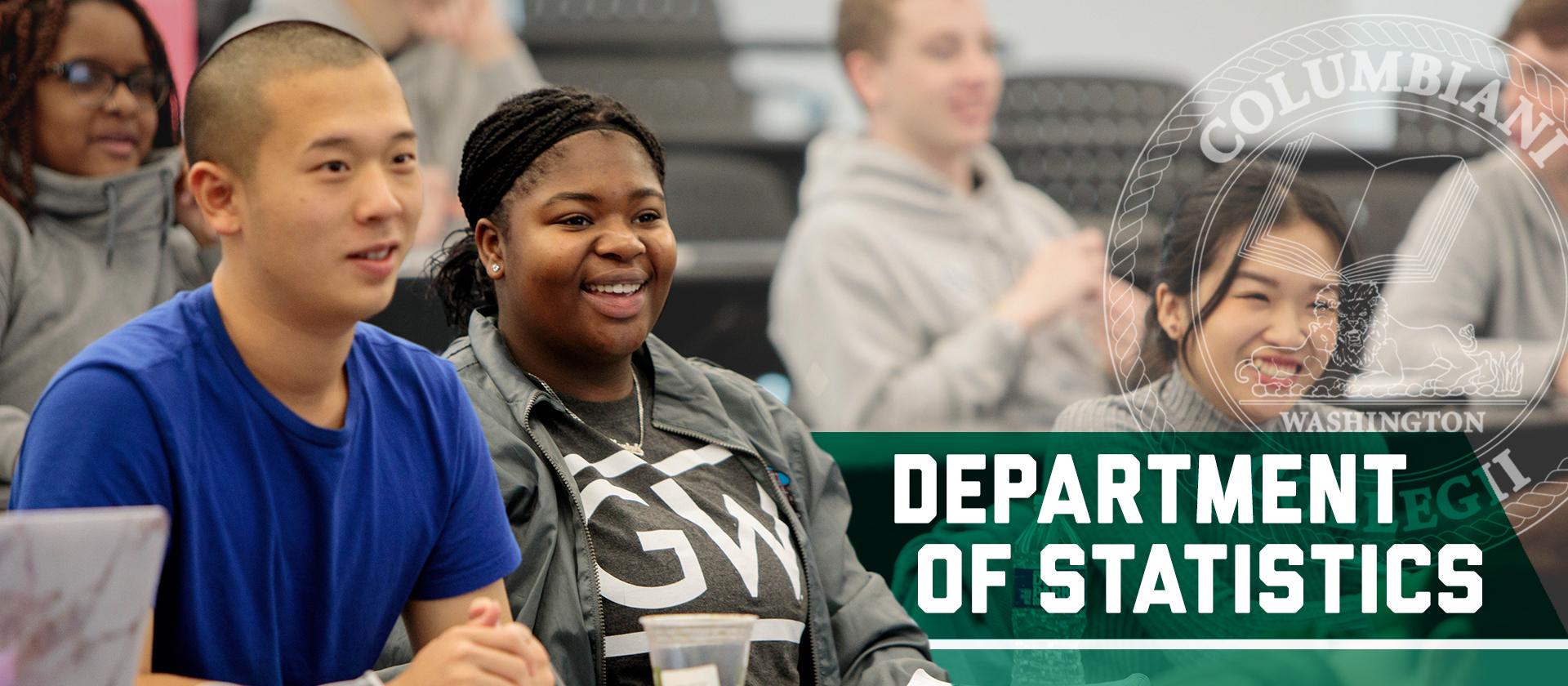
Experts in statistical methodology and solutions
Balancing theory with practical application
Problem-solving through the use of methodology, data analysis and application of statistical concepts is critical to addressing today's real-world challenges in science, medicine, technology, business, public policy and more. At the GW Department of Statistics, undergraduate and graduate students are mastering the skills needed for in-demand jobs in data science, artificial intelligence, predictive analytics and economic forecasting — to name just a few.
Drawing on faculty expertise and collaborations with Washington, D.C., think tanks and government agencies, the department delves deeply into theoretical and applied research. And our alumni are excelling at institutions ranging from the FBI and the National Institutes of Health to Fannie Mae and Amazon.
“I have only positive things to say about the Statistics program at GW. Statistics is a great major for anyone looking for a new and practical way to view the world.”
Nandhish Nuchina
BS '09

Fang Jin Receives Prestigious National Science Foundation CAREER Award
The National Science Foundation awarded four researchers at GW the federal agency’s most prestigious honor, which supports new work from junior faculty.