| |
|
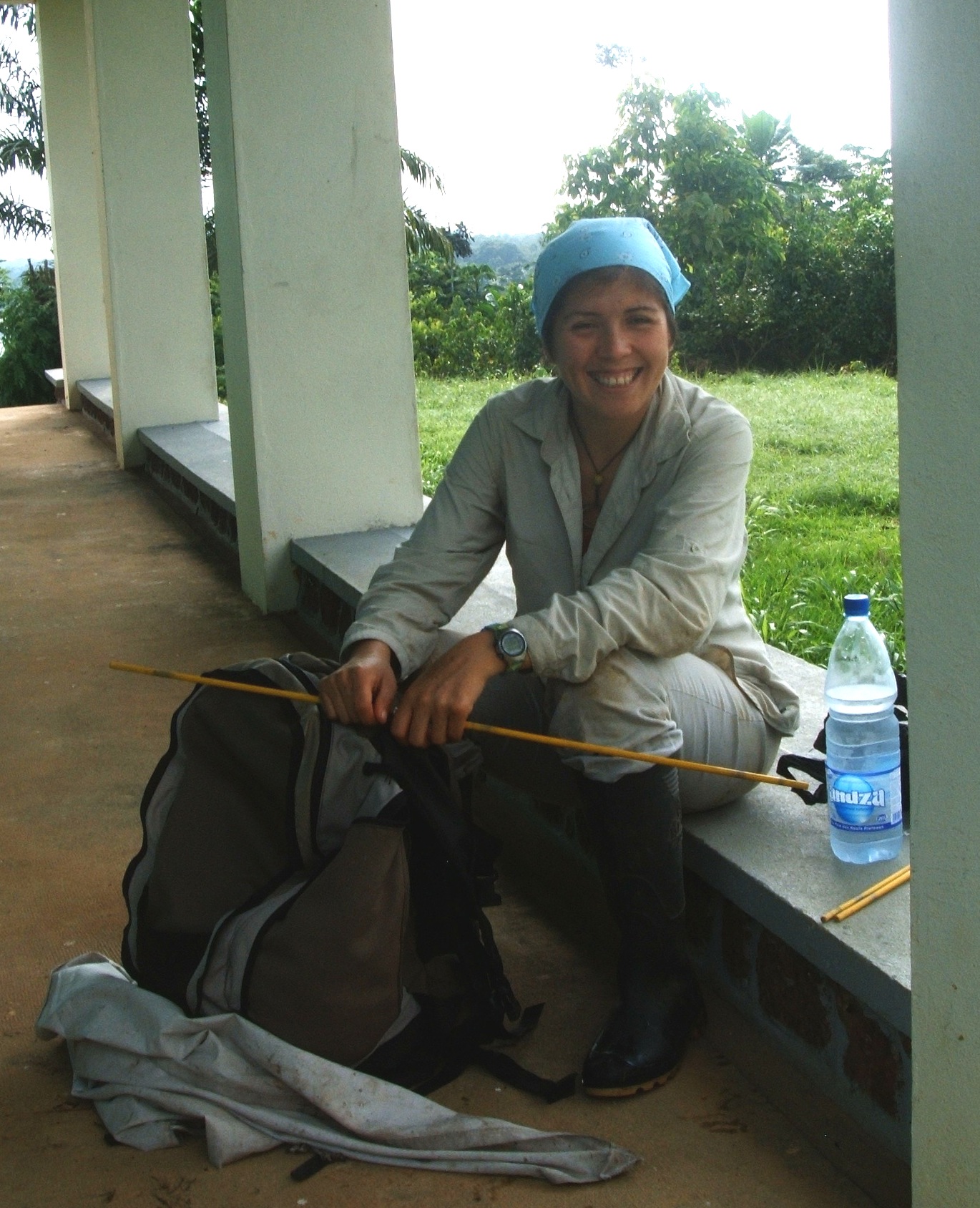
Ligia
Rosario Benavides
PhD Candidate
Phylogeny of the
pirate spiders
form the family Mimetidae
Department of Biological Sciences
George Washington University
2023 G Street. NW
Washington, D.C. 20052
Tel. Lab: (202) 994-0302
Tel. Secretary: (202) 994-6090
Fax: (202) 994-6100
E-Mail: ligia@gwu.edu
|
Education:
2007-present. Ph.D. Candidate. Department of Biological Sciences The George Washington University.
1996-2004 . B.S. in Biological Sciences. Universidad Nacional de Colombia, Bogotá.
Dissertation Title: Comunidades de arañas asociadas al dosel de bosques de tierra firme e Igapó en la Estación Biológica Mosiro Itajura, Vaupes, Amazonia Colombiana (Canopy spiders communities from terra firme and Igapó forest in Mosiro Itajura Biological Station, Vaupés, Colombian Amazon).
Research Interests:
I am intersted the diversity and evolution of tropical arachnids. Using morphological and molecular data, I aim to improve the knowledge on the diversity and phylogenetic relationships of particular groups of spiders and opiliones.
Current project:
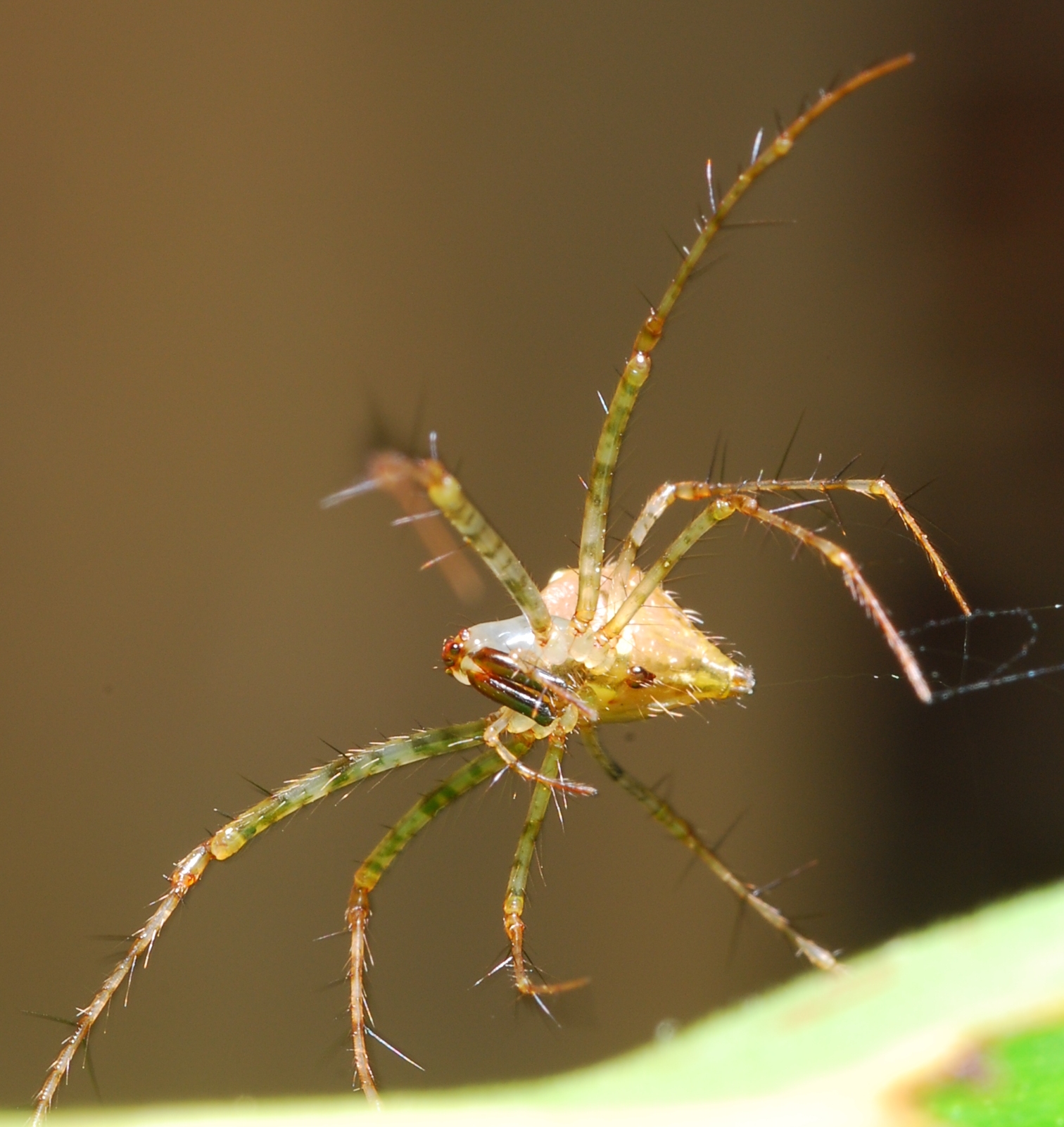
My PhD project focuses on providing a phylogenetic hypothesis on the placement and intrageneric relationships of the pirate spiders from the family Mimetidae. To tackle this questions I am using data from somatic and genitalic morphology and from molecules.
In addition I am working on the taxonomic revision of Gelanor Thorrel, 1869 a genus with neotropical distribution belonging to Mimetidae.
Publications:
Benavides, L., G. Giribet. 2013. A revision of selected clades of the Neotropcal members of the mite-harvestman family Neogoveidae (Arachnida, Opiliones, Cyphophthalmi) with the description of eight new species. Bulletin of the Museum of Comparative Zoology. 161(1):1-4
Murienne, J., L. Benavides, Prendini, L., G. Hormiga, Giribet G. 2013. What does the cryptic arachnid order Ricinulei tell us about past climatic change on African biodiversity.Biology letters 9(1): 1-7
Giribet, G. P. Sharma, Benavides, L., S. Boyer, Clouse, R., B. de Bivort, Dimitrov, D., G. Kawauchi, Murienne J., P. Schwedinger. 2012. Evolutionary and biogeographic history of the harvestmen suborder Cyphophthalmi (Arachnida, Opiliones), an ancient and global group of arachnids. Biological Journal of the Linnaean Society, 105:92-130.
Benavides, L., G. Giribet. 2007. An illustrated catalogue to the South American species of the cyphophthalmid family Neogoveidae (Arthropoda, Opiliones, Cyphophthalmi) with a report on 37 new species. Zootaxa. 1509:1-15
Benavides, L., E. Florez. 2007. Comunidades de arañas (Arachnida: Araneae) en microhabitats de dosel en bosques inundables y no inundables de la Amazonía colombiana. Revista Ibérica de Aracnología. Vol 14:49-62.
Boyer S.L., R. Clouse, L. Benavides, P. Sharma, P. Schwendinger, I. Karunarathna, G. Giribet. 2007.Biogeography of the World: a case study with globally distributed arachnids. Journal of Biogeography. 34:2070-2085.
Rico-G., A.; L. Benavides.2005. Patterns in resources distribution between honey birds and ornitophilic plants in Rio Ñambi Natural Reserve. Acta Biológica Colombiana, Vol. 10 Nº 2, p.153
Workshops:
March 5-11 2011. Bodega Applied Phylogenetic Workshop at the Bodega Marine Laboratory, Bodega Bay, California
July 21-25 2008. Cladistic Workshop at Ohio State University
Appointments:
August 2006 – August 2007
American Museum of Natural History. Laboratory Technician. Assembling the tree of life: Phylogeny of Spiders, NSF Grant.
September 2005 – August 2006
Harvard University . Department of Organismic and Evolutionary Biology. Research Scholar. Systematic of Colombian Neogoveidae (Opiliones: Cyphophthalmi), using morphological and molecular data.
2004-2005
Universidad Nacional de Colombia. Instituto de Ciencias Naturales. Taxonomic determination, classification and organization of specimens in the entomological collection.
2004-2005
Research assistant. Universidad Nacional de Colombia. Instituto de Ciencias. Orbicular spiders. As a part of the project Characterization of flora and fauna indicator groups at the Colombian Cordillera Oriental.
2005-2010
Research collaborator. Sociedad Colombiana de Espeleología (ESPELEOCOL). Invertebrates diversity in Colombian subterranean ecosystems.
Field Experience:
2012
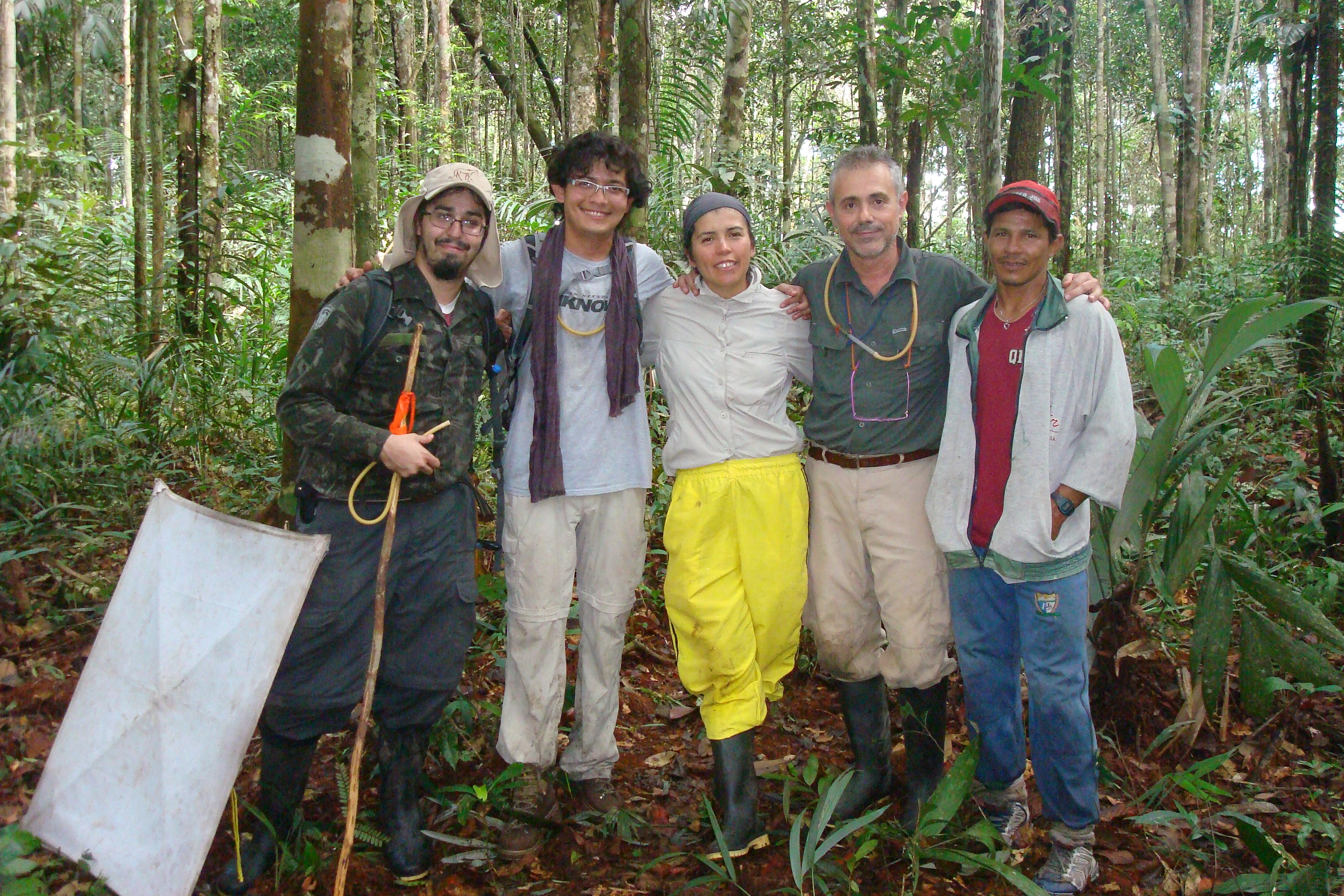
June. Brazil. Project name: Arachnological expedition to the Amazon. With Gustavo Hormiga, Gonzalo Giribet, Ana Lucia Tourinho, Cristina Rheims, Jesus Ballesteros, Thiago Moreira, Liddiane Salvatierra, Williams Porto.
2009
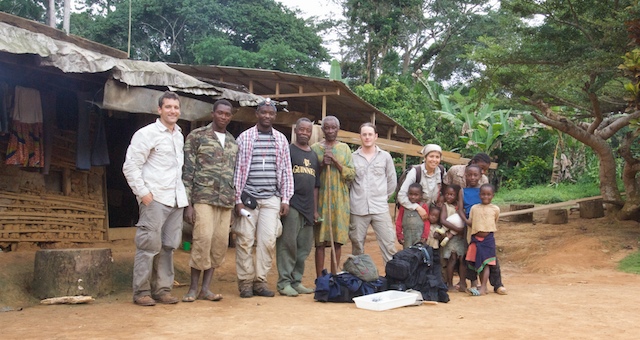
June. Cameroon and Gabon. Project name: Into the Heart of Darkness: in search of the rarest of the rare. With Gonzalo Giribet, Jerome Murienne and J. F. Mavoungou.
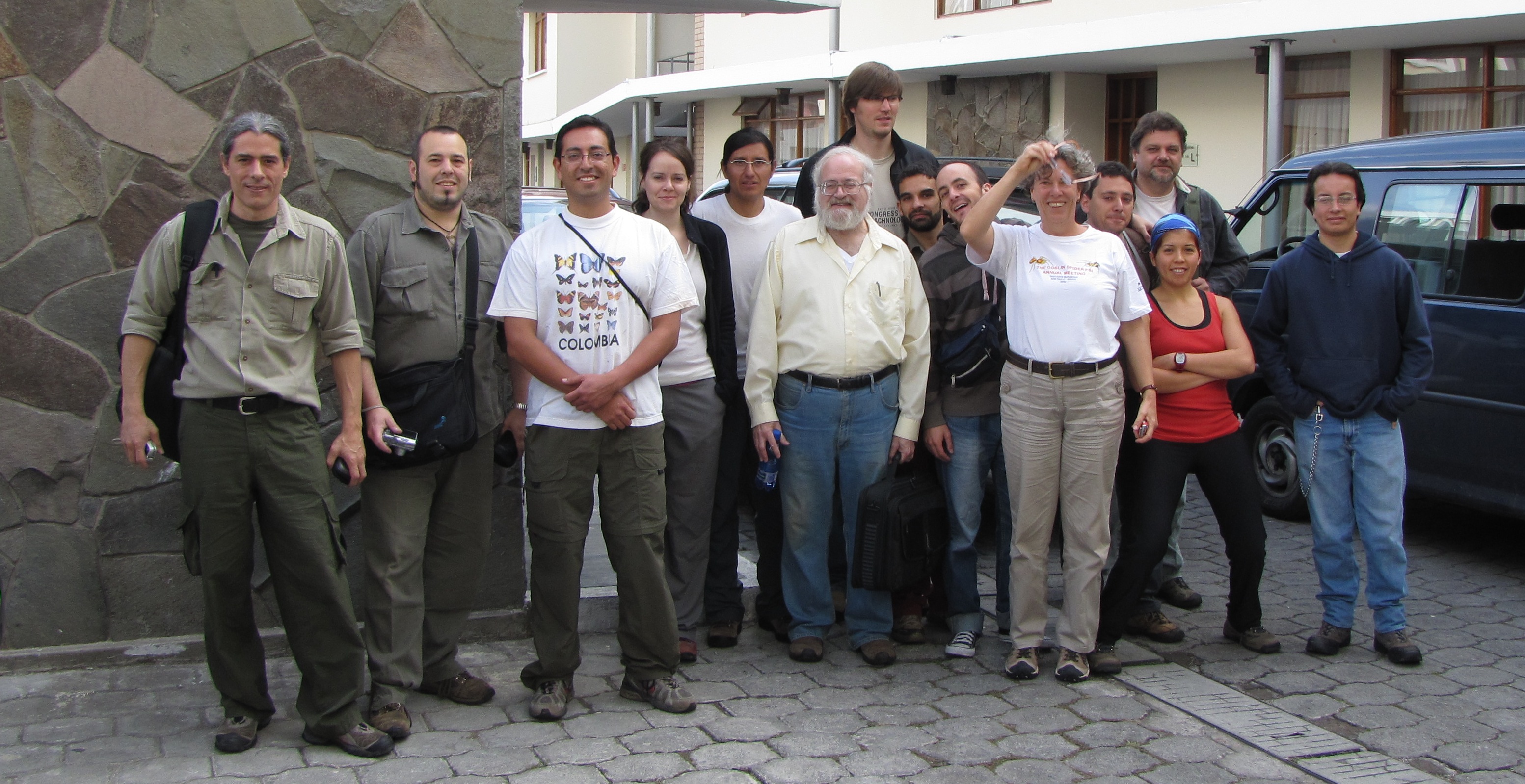
November-December. Ecuador. Project name: Diversity of Ecuadorian Arthropods with focus on arachnids.With: PBI team.
2008
June. Panama. Project name: PANCODING: Panamanian Arthropods barcoding iniciative. Collaborator. With Miquel Angel Arnedo, Gustavo Hormiga, Martin Ramirez, Facundo Martin Labarque, Luis Piacentini
2005
June. Colombia. Cordillera Oriental: Huila, Cunday caves
2004
November. Colombia. Boyaca, Nariño and Amazonas.
June- July. Colombia. Cordillera Oriental. Boyaca and Santander
February-May. Colombia. Amazonas and Vaupes
2003
September-December. Colombia Amazonas and Vaupes
July. Colombia. Cordillera Occidental. Montane Forest
March. Colombia. Huila. Tatacoa desert.
Selected Grants and Awards:
2007-2012
Weintraub Fellowship in Biological Sciences. George Washington University, Washington DC.
2007
Mortenson and Bunting Awards of the Columbian College of Arts and Sciences, George Washington University, Washington DC.
2004
Hermano Apolinar MAria Award to the best research in Ecology and Environment. XXXI Congress ofSociedad Entomologica de Colombia (SOCOLEN)
Membership:
SOCOLEN. Colombian Society of Entomology.
ESPELEOCOL. Colombian Society of Speleology.
Meetings:
2011
L. Benavides & G. Hormiga . Composicion y relaciones intrafamiliares de las "arañas pirata" (Araneae: Mimetidae), desde una perspectica molecular. III congreso LAtinoamericano de Aracnología. Quindío, Colombia. Oral copmmunication.
2010
J. Murienne, L. Benavides & G. Giribet. Phylogeny and biogeography of Ricinulei.XVIII International Congress of Arachnology. Siedlce, Poland. Oral communication
L. Benavides & G. Hormiga. Advances on the phylogeny of pirate spiders (Araneae: Mimetidae): a mlecular approach.XVIII International Congress of Arachnology. Siedlce, Poland. Oral communication
2007
L. Benavides & G. Giribet. Phylogenetic relationships of the Neotropical members of the Cyphophthalmi Family Neogoveidae (Opiliones). XVII International Congress of Arachnology. Sao Pedro , Brazil , August 5-10. Oral communication
Pinzon, J.; L. Benavides & A. Sabogal. New records of species of orb-weaving spiders (Araneae:Araneidae) from the Colombian Amazon. XVII International Congress of Arachnology. Sao Pedro, Brazil, August 5-10. Poster.
Giribet, G.; S.L. Boyer; R.M. Clouse; L.R. Benavides & P. Sharma. Biogeography of the world: a case study from cyphophthalmid opiliones, a globally distributed group of arachnids. XVII International Congress of Arachnology. Sao Pedro, Brazil, August 5-10. Oral communication.
L. Benavides and G. Giribet. Phylogeny of the Tropical Gondwana Cyphophthalmi Family Neogoveidae (Arachnida, Opiliones). Henning XXVI, New Orleans, Lousiana. June 28-July 2. Oral communication.
2006
Pinzon, J.; L. Benavides & A. Sabogal. Orbicular Spiders of Colombian Amazon. II Colombian Congress of Zoology. Santa Marta, Colombia, December 4-10. Oral Communication.
2005
Rico, A. & L. Benavides. Patterns in resources distribution between honey birds and ornitophilic plants in the Rio Ñambi. Natural Reserve. IV Scientific Meeting of Biology students. Oral communication.
2004
Benavides, L. Comunidades de arañas asociadas al dosel de bosques de tierra firme e Igapó en la Estación Biológica Mosiro Itajura, Vaupes, Amazonia Colombiana (Canopy spiders communities from terra firme and Igapó forest in Mosiro Itajura Biological Station, Vaupés, Colombian Amazon). XXXI Meeting of the Sociedad Colombiana de Entomología (SOCOLEN). Oral Communication.
2003
Benavides, L. Canopy spiders of two forests in Colombian Amazon: preliminary data. IV Arachnological Meeting, Sao Paulo, Brazil. Oral Communication.