
|
|||
|

|
Washington, D.C. –
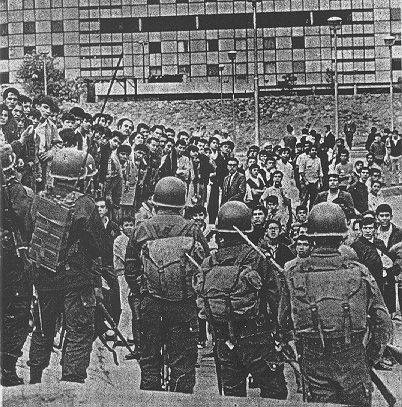
Mexico's tragedy unfolded on the night of October 2, 1968, when a student demonstration ended in a storm of bullets in
La Plaza de las Tres Culturas at Tlatelolco, Mexico City. The extent of the violence stunned the country.
When the shooting stopped, hundreds of people lay dead or wounded, as Army and police forces seized surviving protesters
and dragged them away. Although months of nation-wide student strikes had prompted an increasingly hard-line response from
the Diaz Ordaz regime, no one was prepared for the bloodbath that Tlatelolco became. More shocking still was the cover-up that
kicked in as soon as the smoke cleared. Eye-witnesses to the killings pointed to the President's "security" forces, who
entered the plaza bristling with weapons, backed by armored vehicles. But the government pointed back, claiming that
extremists and Communist agitators had initiated the violence. Who was responsible for Tlatelolco? The Mexican people
have been demanding an answer ever since.
Thirty years later, the Tlatelolco massacre has grown large in Mexican memory, and lingers still. It is Mexico's Tiananmen Square, Mexico's Kent State: when the pact between the government and the people began to come apart and Mexico's extended political crisis began. To commemorate this thirtieth anniversary, the National Security Archive has assembled a collection of some of our most interesting and richly-detailed documents about Tlatelolco, many recently released in response to the Archive's Freedom of Information Act requests, all obtained from the secret archives of the CIA, FBI, Defense Department, the embassy in Mexico City and the White House. The records provide a vivid glimpse inside U.S. perceptions of Mexico at the time, and discuss in frank terms many of the most sensitive aspects of the Tlatelolco massacre which continue to be debated today: the political goals of the protesting students, the extent of Communist influence, Diaz Ordaz's response, and the role of the Mexican military in helping to crush the demonstrations. But while the declassified U.S. documents reveal new details about Tlatelolco, perhaps most important is the challenge their release poses to Mexico today. Thirty years after the massacre, the Mexican government continues to deny its people basic facts about what happened -- refusing to open Army and police records to public scrutiny on the grounds of "national security," denying Congress the right to hear testimony by agents of the state who were present at Tlatelolco. The valiant investigative efforts by reporters, scholars, historians, and an official congressional committee have helped clarify the events of 1968 enormously. But Mexico's secret archives are also critical for a full understanding of Tlatelolco -- and until they are opened, doubts about the truth of the Tlatelolco massacre will linger on.
THE DOCUMENTS
Document 1: CIA Special National Intelligence Estimate, Security Conditions in Mexico, March 28, 1968, Secret In preparation for a visit to Mexico City by Vice President Hubert Humphrey, the CIA issues a special assessment of security conditions in Mexico. Written several months before the first serious wave of student demonstrations began, the document describes the country as a model of stability, with President Diaz Ordaz firmly in control and a ruling party which "virtually monopolizes Mexican politics."
Document 2: CIA Weekly Summary, Student Unrest Troubles Mexico, July 19, 1968, Secret When students launch a series of country-wide protests in July, initial U.S. reporting out of Mexico alerts Washington to several issues that come up again and again in subsequent documents: the potential danger posed by the strikes to the Olympic Games, their political significance, and the role of the "international" left. This CIA analysis discusses Cuban influence on a student strike at the University of Veracruz. Demonstrators seek to disrupt the Olympic games, although the PRI electoral fraud in local and gubernatorial elections also may serve as cause for further unrest.
Document 3 : White House memorandum, Student Disturbances in Mexico City (7/30/68 U.S. Embassy cable attached, untitled), July 31, 1968, Secret, Bowdler to LBJ Mexican authorities claim to have "solid evidence" that the Mexican Communist Party, with Soviet complicity, engineered the July 26 riot. The U.S. Embassy does not have corroborating evidence, but suggests that Moscow may have ordered riot to counteract impact of events in the Czechoslovakia.
Document 4: CIA Weekly Summary, Students Stage Major Disorder in Mexico, August 2, 1968, Secret The July 26 riot provides a classic example of Communist agitation techniques. Document questions Mexican claims of Soviet complicity, however, as USSR does not want to undermine its good relations with Mexico.
Document 5: DIA Intelligence Information Report, Troops Used to Help Quell Mexico City Student Riots, c. August 15, 1968, Confidential Report provides a chronological account of Mexican military involvement in disbanding student protests in Mexico City during the week of July 29. While the report states that the military performed "creditably," it also notes some charges of "over-reaction," such as the alleged "hazing" of students inside one school. The Mexican Government denies reports that 4 students were killed during the disturbances. Generals Mazon and Ballasteros head a special military "Task Force" to deal with the situation of unrest.
Document 6: CIA Weekly Review, Mexican Government in a Quandary Over Student Crisis, August 23, 1968, Top Secret CIA says the Mexican Government may be underestimating students’ ability to continue large-scale, disciplined demonstrations. The present impasse is due to the Government's belief that a) giving in to students would invite further demands and b) ignoring situation most likely will lead to further disruption. Document claims that Communist youths are involved in the crisis. CIA says that further violent outbreaks can be expected.
Document 7: White House message, Student Situation in Mexico (U.S. Embassy cable attached, Student Situation, August 29, 1968), August 29, 1968, Confidential, Rostow to LBJ Rostow reports to President Johnson that the Mexican Government's conciliatory strategy has not quelled student disturbances, and a return to a "get-tough, no-nonsense posture" is inevitable. Rostow claims that while the violence is not likely to affect Diaz Ordaz's administration, it will no doubt affect the Olympics in a negative manner.
Document 8: CIA Intelligence Information Cable, Mexican Military Alert for Possible Cuban Infiltration of Arms Destined for Student Use, August 30, 1968, Classification excised CIA source claims that Cuba is prepared to smuggle arms to students for September demonstrations in Mexico. In response, Mexican Navy and army troops along the coast are put on high alert.
Document 9: CIA Weekly Summary, Mexican Government Stalls Student Movement, September 6, 1968, Secret While the Mexican Government has made minor concessions to protesting students, the approach of the Olympics will most likely lead the Diaz Ordaz administration to meet further demonstrations with very tough measures.
Document 10: CIA Intelligence Information Cable, Situation Appraisal: Status of the Mexico City Student Movement, September 9, 1968, Classification excised Cable states that students are increasingly organized, and able to exercise some influence on national affairs. The Mexican Government has not been unified in action against the protesters, and President Diaz Ordaz continues to avoid becoming personally involved. While no hard evidence exists that Cubans or Soviets masterminded the student demonstrations, the Mexican Government continues to inspire such rumors. Cable concludes that "the old order is passing" and the PRI has lost control over public behavior.
Document 11: CIA Weekly Summary, Mexican Students Still Spar with Government, September 13, 1968, Secret CIA refers to the Mexican Government's "behind the scenes maneuvering to divide the students," including efforts by the officially-inspired "committee of the authentic student body" to quash future student strikes.
Document 12: White House message, Untitled, September 19, 1968, Confidential, Rostow to LBJ Rostow alerts President Johnson to the military's decision to occupy UNAM in response to the student strike and take-over of university buildings.
Document 13: DIA Intelligence Information Report, Army Intervenes on Additional Occasions in Mexico City Student Situation, September 24, 1968, Confidential Report states that Mexican Army troops were again employed to disperse protesting students, from 8/28 into the month of September. The period marked the first known involvement of troops from outside Mexico City, indicating the increasing seriousness of the matter. The September 18 occupation of UNAM also indicates that the position of the Mexican Government is hardening.
Document 14: FBI memorandum, Olympic Games, Mexico City, Mexico: October 12-27, 1968, September 26, 1968, Confidential, Sullivan to Wannall FBI goes on alert for movement of "U.S. subversive elements" into Mexico, which the agency believes may try to disrupt Olympics and participate in student uprisings.
Document 15: CIA Weekly Review, Violence Grows in Mexican Student Crisis, September 27, 1968, Top Secret CIA reports "stresses" on and within the Mexican political establishment stemming from student unrest and the increasingly violent confrontations between protesters and the Mexican security forces.
Document 16: White House memorandum, Security Considerations in Mr. Nixon’s Planned Visit to Mexico (CIA intelligence estimate attached, with cover memo, September 26, 1968), September 27, 1968, Secret, Rostow to LBJ CIA expresses concerns about security conditions in Mexico and suggests that Nixon cancel his plans to visit Mexico during the Olympics. If he does go, the CIA document warns, Mexican security forces would have hard time protecting him, and "anti-U.S. extremists" would cause "some nasty incidents."
Document 17: FBI letter, Olympic Games, Mexico City, Mexico - October 12-27, 1968, c. October 1, 1968, Confidential Document discusses potential threats to the Olympic games. These include individual US citizens with histories of subversive activity and anti-Castro Cubans, who are expected to try and harass Cuban athletes during the games. The FBI urges that information about potential subversives be provided to the U.S. and Mexican Governments.
Document 18: CIA Weekly Summary, A Renewed Violence in Mexico, October 4, 1968, Secret New violence (Tlatelolco) puts Government of Mexico’s ability to safeguard Olympics in jeopardy. All military zone commanders have been granted the authority to "move against disorderly students."
Document 19: White House memorandum, Mexican Riots - Extent of Communist Involvement (CIA memorandum, October 5, 1968 and FBI cable, October 5, 1968 attached), October 5, 1968, Secret, Rostow to LBJ CIA concludes that recent student unrest was sparked by domestic conditions. Cuban and Soviet involvement was limited to moral and some financial support. The FBI reports Communist/Trotskyist groups formed the Olympia Brigade, a "shock group" which allegedly initiated the shooting at Tlatelolco on 10/2.
Document 20: FBI cable, Olympic Games, Mexico City, Mexico, October Twelve - Twenty Seven, Nineteen Sixty Eight, October 8, 1968, Confidential, Director FBI to LEGAT Mexico City To protect U.S. athletes during the Olympics, the FBI must establish a liaison in the U.S. Embassy for channeling information to U.S. Olympic team officials regarding safety concerns. Cable emphasizes the necessity of concealing the FBI's role to avoid jeopardizing ongoing FBI operations in Mexico.
Document 21: CIA report, Answers to Questions Raised by White House Concerning Student Disturbances in Mexico (White House cover memorandum attached, October 9, 1968), c. October 8, 1968, Secret, Lewis to Rostow CIA addresses issues raised by FBI sources and concludes a) no evidence exists of significant foreign influence in riots, b) external influences included moral support and some financial support, but not the supply of weapons, and c) the Trotskyist "Brigada Olympia" was developed with the intentions of interfering with the Olympic games.
Document 22: Department of State telegram, Untitled [Mexico Riots] (White House cover memorandum attached, October 14, 1968), October 12, 1968, Confidential The U.S. Embassy states that, contrary to official Mexican reports, direct foreign involvement in the student uprisings has been "essentially negligible." Rather, newer and more extreme student elements are responsible for the continued unrest and riots such as that which occurred at Tlatelolco on 10/2. The Mexican Government has increased military pressure with the intention of seizing the leaders of the extremist student groups. Document states that the foreign influence argument has been used by the Mexican Government to divert attention away from deep local problems.
Document 23: DIA Intelligence Information Report, Army Participation in Student Situation, Mexico City, October 18, 1968, Confidential Report provides a chronological account of the Army's role in controlling student uprisings from 9/24 through 10/18. With regards to Tlatelolco, report states that on 9/30, troops withdrew from the UNAM campus, which they had occupied since 9/18. Also on 9/30, the Mexican Defense Minister instructed military zone commanders throughout the country to move against student disturbances "without waiting for instructions." Report provides a key overview of the events of 10/2 at Tlatelolco and the days immediately following.
Document 24:DIA Intelligence Information Report, Mexican Army Preparations to Cope with Future Student Disturbances in Mexico City, October 22, 1968, Confidential Following the close of the Olympic games and the expected return of students to classes, the Mexican military expects a resurgence in student protest activity. To counter possible future violence, the military is training two special 1,500-man units, one of which carries the name "Brigada Olympia."
Document 25: 10/23/68 DIA Intelligence Information Report, Status of Brig. Gen. Jose Hernandez Toledo, October 23, 1968, Confidential Gen. José Hernández Toledo, wounded at Tlatelolco, is recovering at a Mexican military hospital. A source tells the DIA that the Mexican Army "had taken good care" of the 18 foreigners (including some Cubans) involved in the events at Tlatelolco. When asked to clarify, the source said "good care" meant detention.
Document 26: CIA Weekly Summary, Mexican Government Readies for More Student Trouble, November 1, 1968, Secret Although it is unclear whether students will continue the strike, this document suggests that the "new left" (extremists) within the student movement seek to prolong the unrest and continue their provocations against the Mexican Government. Mexican officials are preparing for future violence.
Document 27: INR Working Draft (extract), Student Violence and Attitudes in Latin America, c. November 15, 1968, Confidential According to this draft analysis of student unrest in Latin America, the disorders in Mexico are the worst in the hemisphere. The continued violence demonstrates a deep and widespread dissatisfaction with the Government of Mexico, and has severely damaged Mexico’s reputation as being the "most stable and progressive country in Latin America."
Document 28: CIA Weekly Summary, Mexican Student Strike Apparently Waning, Dcember 6, 1968, Secret Document states that despite intermittent attacks by extremist groups, the student strike in Mexico is nearly over. In the wake of a student vote to end the strike, class attendance is rising.
Document 29: CIA Weekly Summary Special Report, Challenges to Mexico’s Single-Party Rule, January 17, 1969, Secret As students return to classes, the "authentic context" to student strikes is becoming clear: the demonstrations of 1968 represent a strong warning to the Government of Mexico. Although Mexican officials claimed "outside agitation" was the basis of the unrest, document states that most reports linking the student movement to subversion remain unsubstantiated. Finally, document states that the events at Tlatelolco caused severe political damage to the Mexican Government.
Document 30: DIA Intelligence Information Report, General Officers in Disfavor with Secretary of Defense, c. March 24, 1969, Confidential Generals Ballesteros Prieto and Luis Gutierrez Oropeza are both out of favor with the Minister of Defense because they ignored his orders to keep troops out of Tlatelolco. According to source, soldiers were merely supposed to surround students and observe with the intention of confining the demonstrators to that part of the city.
|
||

|
home | about | documents | news | postings | FOIA | research | internships | search | donate | mailing list
|